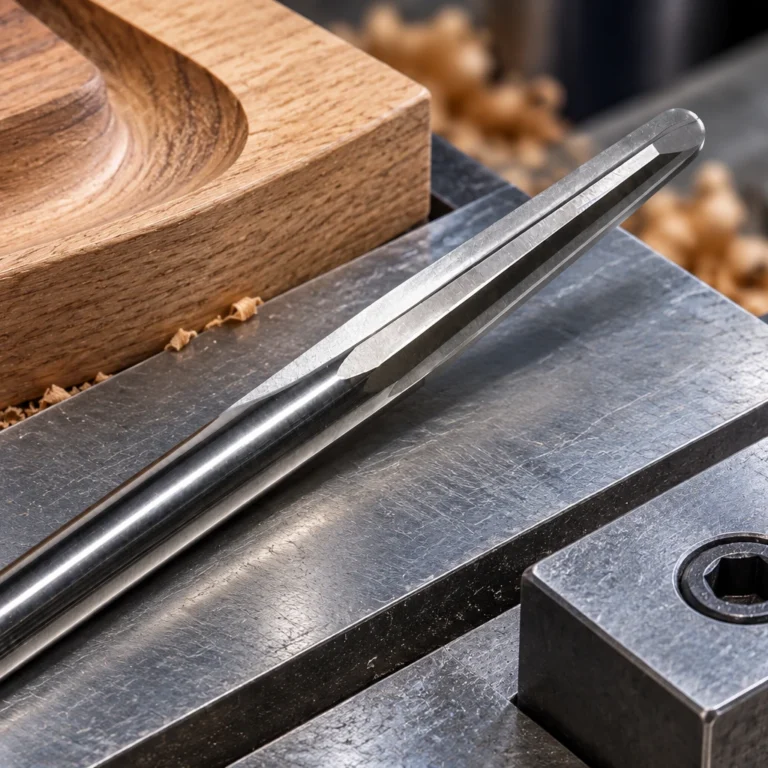
CNC router bit testing becomes useful when the result can be repeated and traced to a specific setup. JEEFOO’s WB 6.35 x 12.7 listing identifies a spur straight cutter for grooving, slotting and related woodworking operations. A small, representative test piece can help a workshop qualify the selected configuration before a production run.
Table of Contents
1. Design CNC Router Bit Testing Around the Real Part
Choose a coupon that contains the job’s critical features without recreating the whole component. Include the relevant groove length, entry condition and any change in cutting direction. Use matching material, thickness and workholding wherever practical. A test in different stock may demonstrate that the program runs, while leaving the production result unverified.
Define the acceptance checks before machining. These might include groove width, depth, position and the allowable surface defects for the finished application. Decide where measurements will be taken and what constitutes a pass. Use the drawing’s actual tolerances instead of inventing universal limits for every material and product.
2. Preserve a Traceable Baseline
Assign the trial an identifier and record the tool reference, confirmed geometry, holder, installed projection and machine. Add the material description, program revision and approved operating settings. Include the workpiece datum and fixture arrangement. This gives the next operator enough context to reproduce the trial rather than starting with an unexplained collection of numbers.
For the WB cutter, verify the actual cutting diameter, shank and cutting length against the supplier’s drawing. The listed configuration name should remain part of the record, but dimensions need their own clearly labeled fields. Keep the approved setup within the tool and machine manufacturers’ limits.
3. Inspect the Trial Consistently
After the machine stops, inspect the coupon at the preselected locations. Record the measured results and photograph visible defects with consistent lighting and orientation. Retain a representative accepted sample when practical. If a change is needed, identify the variable, produce a new test and compare it against the baseline using the same inspection method.
4. Define the Production Release
Turn the accepted trial into a concise setup record with a named program revision and release date. Decide which changes require requalification, such as a different material, cutter geometry, holder or fixture. For recurring work, compare subsequent first pieces with the approved criteria and investigate a drifting result before extending the run.
Repeatable CNC router bit testing connects the chosen JEEFOO WB cutter with a defined part requirement and an inspectable result. Keep the coupon, setup record and release criteria together so a successful trial becomes a dependable production starting point.
CNC Router Bit Testing: Frequently Asked Questions
What should the first-piece coupon contain?
Use representative stock and include the critical groove, entry condition and direction changes from the real job. CNC router bit testing should check the features that determine acceptance, with measurement positions agreed in advance. A simple coupon is useful only if it represents the production requirement.
Does a successful program run mean the part passes?
No. Completing the toolpath establishes that the program ran under the trial conditions. Measure width, depth and position against the drawing, and inspect the specified surfaces separately. Record actual results rather than replacing measurements with a general pass label or an attractive photograph.
Which changes require a new trial?
Define this in the release record. Changes to material, cutter geometry, holder, projection, fixture or program can affect the result. Repeat CNC router bit testing when a change invalidates the approved baseline, using the same acceptance criteria and inspection method unless the drawing itself has changed.
What information helps another operator repeat the test?
Keep the exact tool reference and confirmed drawing, machine and holder details, material batch, fixture arrangement, datum and program revision together. Add approved operating settings, measurement locations, results and sample identification. CNC router bit testing records should distinguish the current approved setup from superseded trials, so a previous rejected result is not used for production.
For dimension planning, see the straight router bit groove and shank guide. Consult OSHA router guidance for general guarding and secure fastening considerations, together with the instructions for the actual tool and machine.