Table of Contents
1. Select Tapered Ball Nose Router Bits Against the Raw Surface
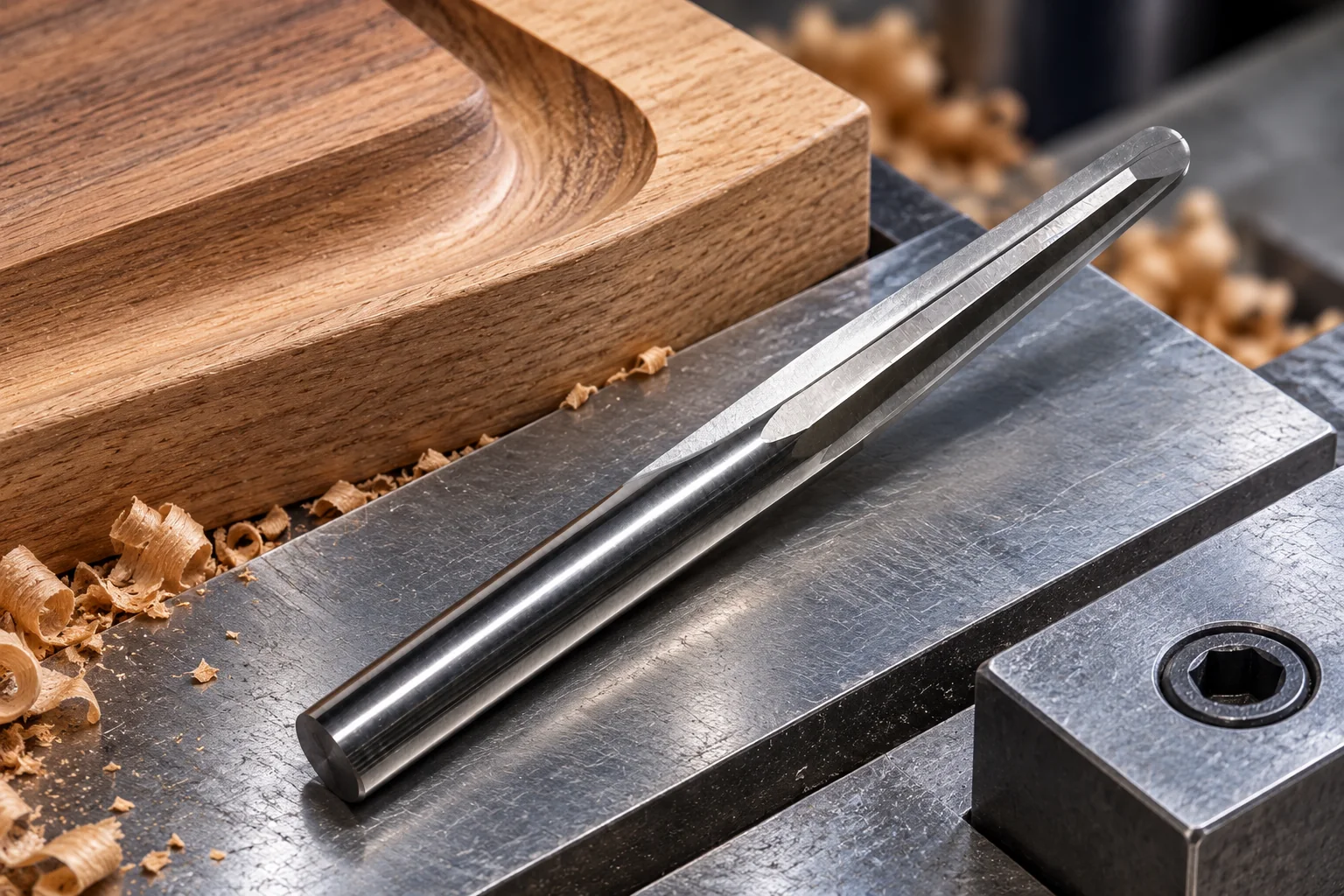
When comparing tapered ball nose router bits for 3D wood relief, inspect the surface before hand sanding can conceal a recurring machining problem. A GC taper ball end mill trial should define the acceptable raw finish and the later finishing work. The JEEFOO GC-6 x R1.5 x 10° x 30H x 60L page identifies a solid-carbide cutter with a 6 mm shank, R1.5 ball radius, 10° angle marking, 30 mm cutting height and 60 mm overall length. Verify the supplied cutter against the confirmed drawing before testing. Confirm what the angle marking denotes against the supplied drawing before approving the cutter.
2. Choose a Sample That Reveals Texture
Include a broad rounded area, a crest and a transition into a recess in the approval sample. A small, nearly flat test patch cannot represent the visual character of the whole relief. Use representative timber and document its grain orientation. Keep a clean, unsanded section of each trial so that brushing, handling or later finishing does not erase the evidence being compared.
3. Inspect Wood Relief Under Consistent Light
Assess wood relief surface finish first with diffuse light, then with light directed across the carving to reveal repeated ridges and local torn fibers. Rotate the sample instead of choosing a flattering viewing angle. Mark grain-direction changes and distinguish isolated wood variation from patterns following programmed passes. Maintain the same camera distance and lighting between trial photographs; a brighter image is not proof of a better CNC carving result.
4. Change One Process Factor at a Time
When comparing toolpath strategies, retain the cutter identity, material specification and other relevant setup conditions. Record each program revision and the area inspected. Do not assume that an arbitrary smaller stepover is automatically the most economical answer: the acceptable result depends on the shape, wood, machine and subsequent finish. This article gives no universal feed, spindle-speed or stepover value. Validate changes within the equipment and tool supplier’s limits, with secure workholding and appropriate dust extraction.
5. Define Acceptable Finishing Effort
Agree which marks may remain before finishing and which need correction during machining. Repeated ridges across an exposed crest should not be accepted simply because an operator can eventually sand them away. Compare CNC carving finishing effort using the approved raw sample, including the risk of sanding away small details. Retain a separately labelled finished reference so purchasing and production do not confuse the tool’s machining result with the outcome after manual correction.
6. Release an Inspection Method with the Program
A purchase specification should connect the confirmed GC tool, approved program and raw-surface reference rather than promising a finish from the cutter name alone. On subsequent orders, compare first pieces before sanding begins. If the result changes, inspect tool condition, timber variation and setup before adjusting several parameters together. This makes surface acceptance repeatable across operators without claiming that one cutter geometry guarantees a particular finish.
Summary
Qualify tapered ball nose router bits for 3D wood relief against an unsanded surface reference, then evaluate finishing effort. GC tool identity, material and program records should remain linked.
Tapered Ball Nose Router Bits: Frequently Asked Questions
Why inspect a relief before sanding?
Sanding can conceal repeated toolpath marks and remove small details. Keep an unsanded reference when assessing tapered ball nose router bits, and compare it separately with the finished reference. This distinguishes the machining result from later manual correction.
Does the ball radius describe the complete tool shape?
No. Check the ball radius, tapered section, usable cutting height, shank and overall length against the confirmed drawing. For tapered ball nose router bits, the radius alone does not establish access to a recess or clearance around the holder. Confirm what the stated angle denotes before programming.
What should a repeatable inspection record contain?
Record the exact cutter, drawing revision, timber and grain orientation, program revision, workholding and inspected area. Photograph tapered ball nose router bits trials with consistent lighting and retain both raw and finished samples. Review recurring ridges separately from isolated torn fibers so the next trial addresses a defined issue.
For recessed flat areas, compare the pocket floor inspection guide. General guarding and secure fastening considerations are described in OSHA router guidance; follow the instructions for the actual equipment and cutter.