Start with a section through the part
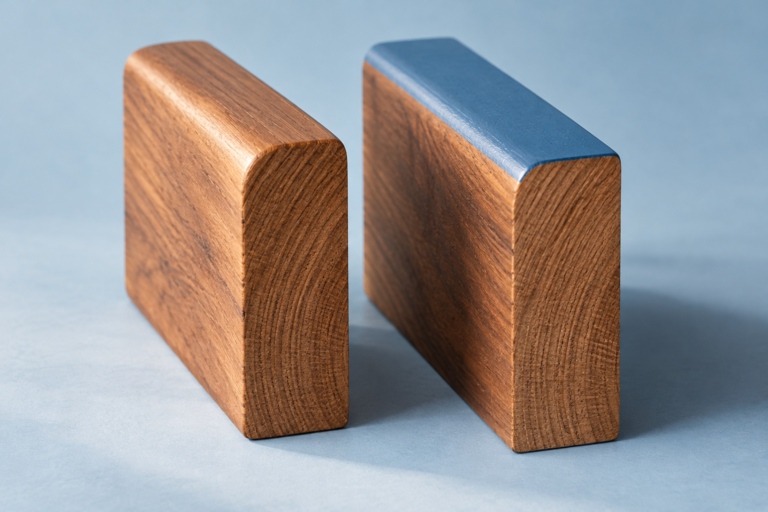
A top view can make two woodworking features look almost identical: both may appear as a pair of parallel lines. A section through those lines reveals the difference. One feature may require a curved channel for decoration; the other may require a flat floor inside a recess. The intended floor shape should lead router bit selection before the buyer compares size labels.
The JEEFOO listing on this site describes the GY 6×22 round-bottom knife as a tool for concave grooves, rounded channels and decorative details. The separate GW 12.7×45 listing describes a cleaning-bottom cutter for flat recess floors, surfacing and pocket cleanup. These are supplier-described product roles, not results from an independent comparison test.
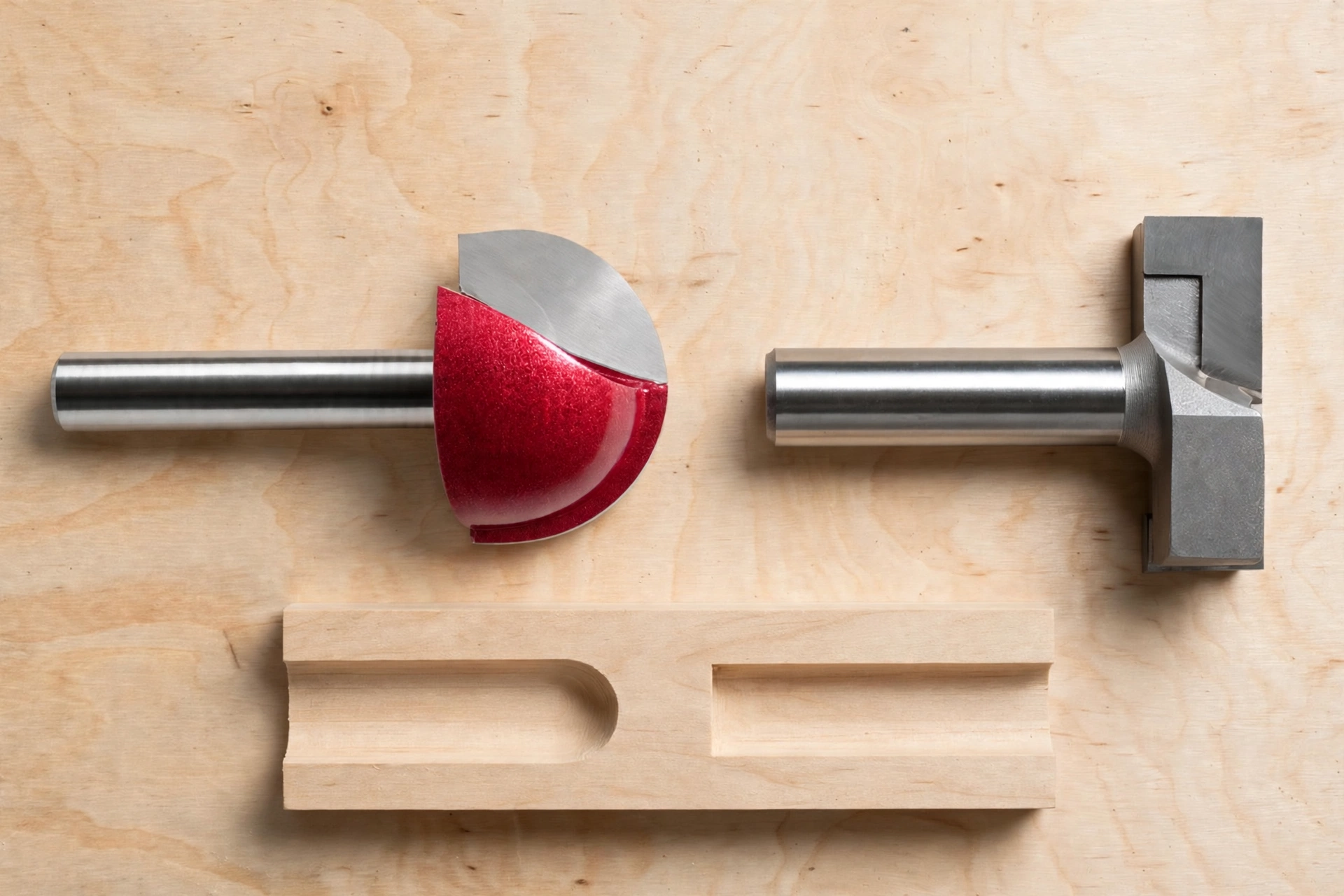
What the two router bit profiles are being asked to produce
For a decorative channel, draw the desired curved section and identify where it meets the uncut face. A requirement for a rounded bottom belongs with a confirmed curved cutting profile, making the GY family a relevant candidate. The listing includes solid wood, hardwood, MDF and plywood among compatible applications. That does not establish suitability for every coating, board construction or machine.
For a recess with a specified flat floor, show the required bottom surface and its relationship to the surrounding part. The GW listing is relevant to this task. It includes MDF, plywood, hardwood, particleboard and solid wood, subject to the actual machining conditions. A cutter selected to clean a floor should not automatically be assigned every roughing, entry or wall-finishing operation in the same pocket.
Consider a hypothetical cabinet component containing a decorative line next to a shallow recess. The line may be judged by its curved profile, while the recess may be judged by its floor geometry. Calling both features “grooves” hides their different requirements. This example is a planning illustration, not a report of a customer job or a recommendation for an unspecified joint.
Read each size label on its own terms
The GY page identifies the 6×22 configuration but directs the reader to confirm the drawing, including the actual radius, diameter, shank and cutting length. It is therefore insufficient to infer an exact groove radius from that label alone.
The GW page explicitly identifies 12.7 mm as the cutting diameter and 45 mm as the overall length. It still requires confirmation of the shank, usable cutting length and shoulder clearance. Overall length is not permission to machine a recess of the same depth. Keep these dimension categories separate when reviewing the installed tool assembly.
The router bit comparison is consequently about two listed product roles. It is not a claim that either configuration can replace the other in an existing program simply by changing the tool number.
Use a different acceptance question for each floor
For the curved channel, an editorial planning approach is to record the intended section and agree how the profile will be compared with it. Inspect the transition into the surrounding face as well as the lowest point. A pleasing reflection alone does not establish that the intended section has been produced.
For the flat recess, define the relevant floor area and the drawing requirement before inspecting it. A single depth reading is useful only for what it measures; it does not describe every location across the floor. Choose the inspection method and acceptance limits from the part specification rather than inventing a universal tolerance for this cutter.
Both product pages call for confirmed machine compatibility and a controlled trial on representative material. Follow the applicable equipment and tool instructions for setup, guarding and operation, and stop safely before measuring. No universal speed, feed, depth or tool-life figure is proposed here.
A useful router bit selection record
Keep the feature section, chosen product reference, confirmed drawing revision and acceptance method together. The decision should remain understandable when another person revisits the job: GY was considered because the feature required a concave channel; GW was considered because the operation required a flat floor. That record connects the router bit to the intended part instead of allowing a familiar size label to make the decision.
Sources: JEEFOO GY 6×22 and GW 12.7×45 product listings on jeefoowoodbits.com, checked on 5 November 2026. Product descriptions and stated dimensions are supplier information; the comparison and suggested selection record are editorial guidance.