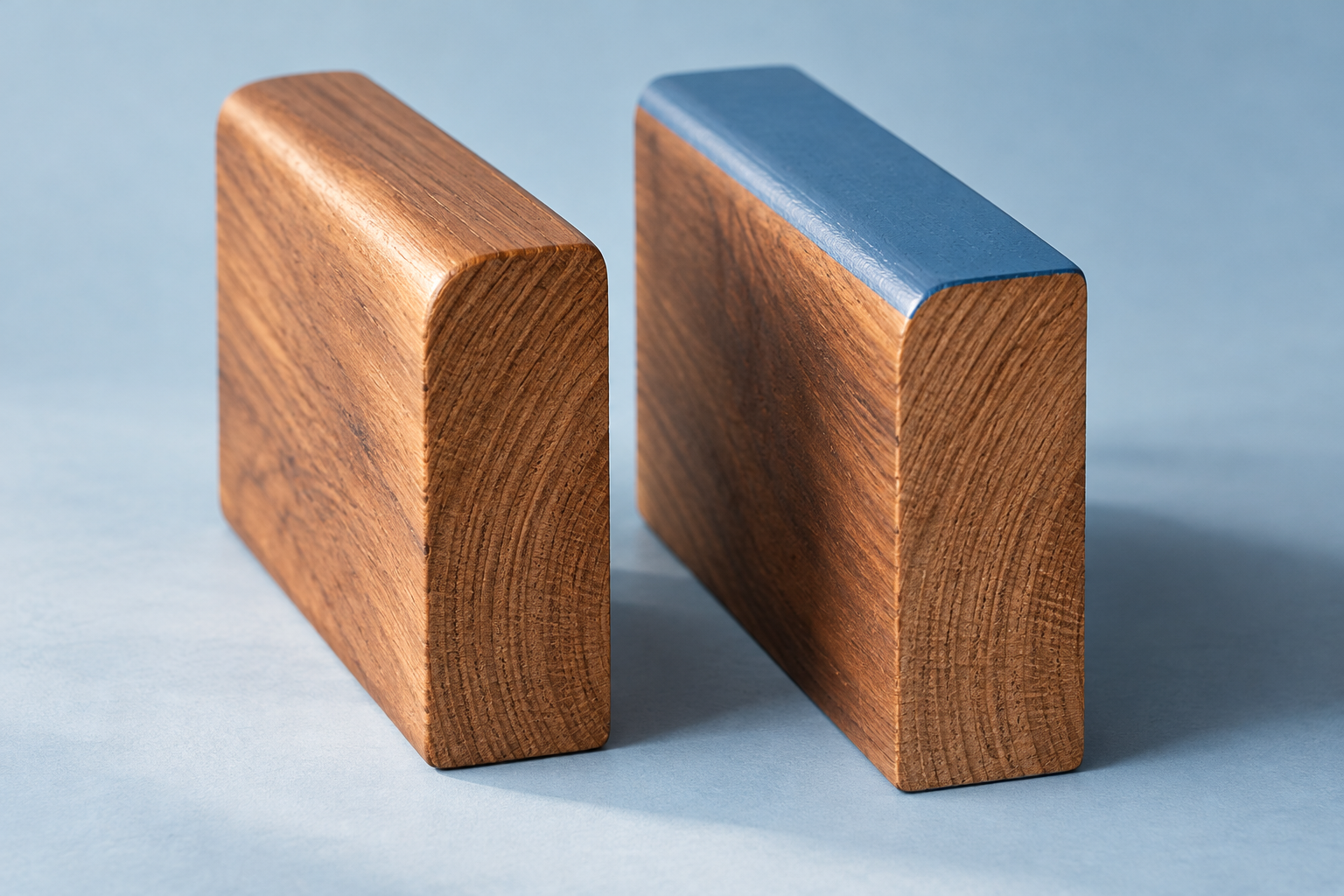
Modified wood and coated wood describe different things. Modification changes the timber itself; a coating belongs to its surface system. For a workshop routing an edge or forming a new profile, that distinction explains why removing a finished face does not necessarily remove the wood’s underlying modification, yet can still leave a finishing task.
Recent industry guidance makes this separation useful. Thermory’s September 2026 material guide treats species, profile and finish as separate decisions. Accoya’s 2026 Wood Information Guide likewise discusses processing and coatings separately. Neither approach treats an attractive board surface as a complete description of the material beneath it.
Modified wood treatment is not necessarily a skin
Accoya’s manufacturing explanation describes acetylation through the wood, rather than an unmodified core enclosed by a treated shell. The manufacturer states that cutting or jointing does not expose unacetylated wood. That is a statement about this particular material and process, not a rule for every timber sold as treated.
Thermal modification is a different route. Thermory’s 2025/2026 cladding catalogue describes heat-and-steam processing throughout the board. The same catalogue also offers coated and oiled products. A board can therefore be modified and finished: these descriptions can coexist without being interchangeable.
Routing creates a new surface, not a new material identity
Imagine a finished timber strip whose edge is reshaped into a decorative curve. The new curved face occupies material that was previously inside the strip. Wherever the operation removes an existing coating, the new face cannot be assumed to retain that original coating merely because adjacent faces still look finished.
Conversely, a freshly exposed face in documented through-modified timber is not automatically ordinary untreated stock. The machining operation changes the boundary of the part. It does not, by itself, reverse the manufacturing process throughout the remaining wood. This is why “the treatment has been cut away” is too imprecise to describe every routed component.
Colour is evidence of appearance, not treatment depth
A darker outer face and a lighter routed surface may invite a quick explanation: the cutter must have removed all the treatment. Accoya’s guide describes variable surface discolouration on unprocessed boards, separately from acetylation. A visible colour boundary should therefore not be treated as a map of chemical modification.
The reverse assumption is equally weak. Similar-looking faces do not prove that two boards share a material specification. A photograph records appearance under particular lighting; it cannot replace the supplier’s identification of the timber and its processing history. That matters when a drawing calls for both a particular profile and a specified finished surface.
The cutter defines geometry; the material system defines the rest
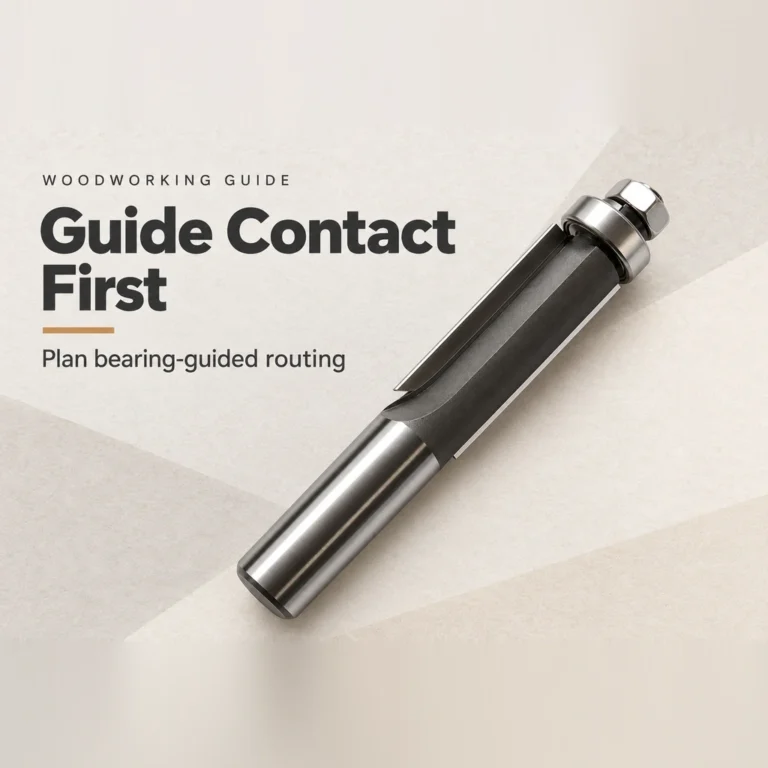
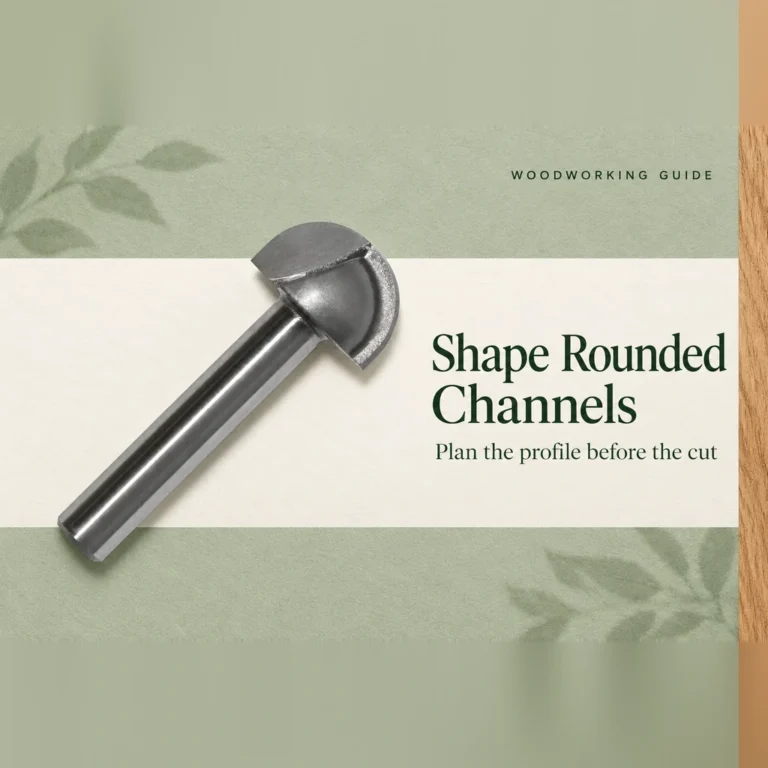
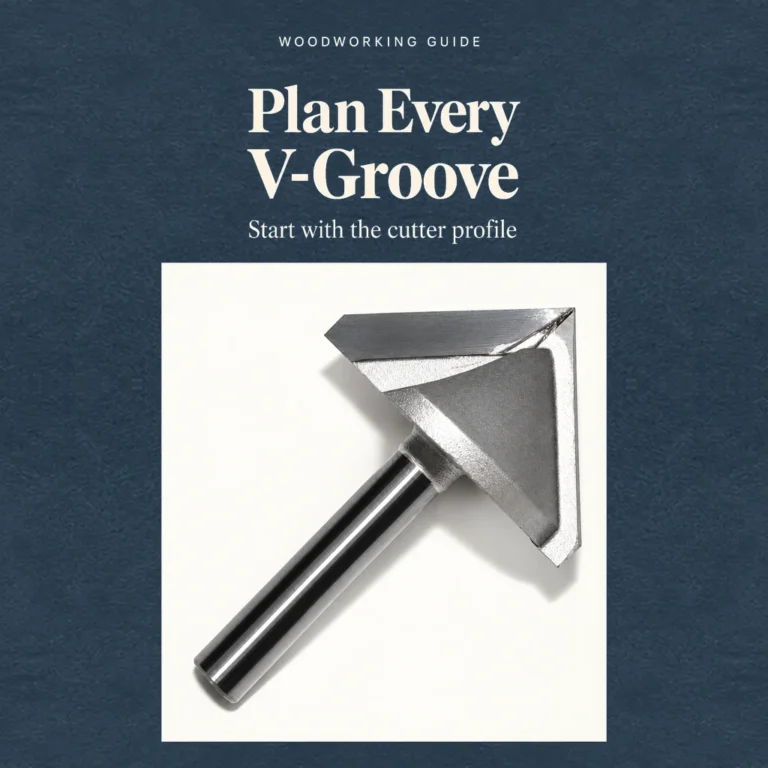
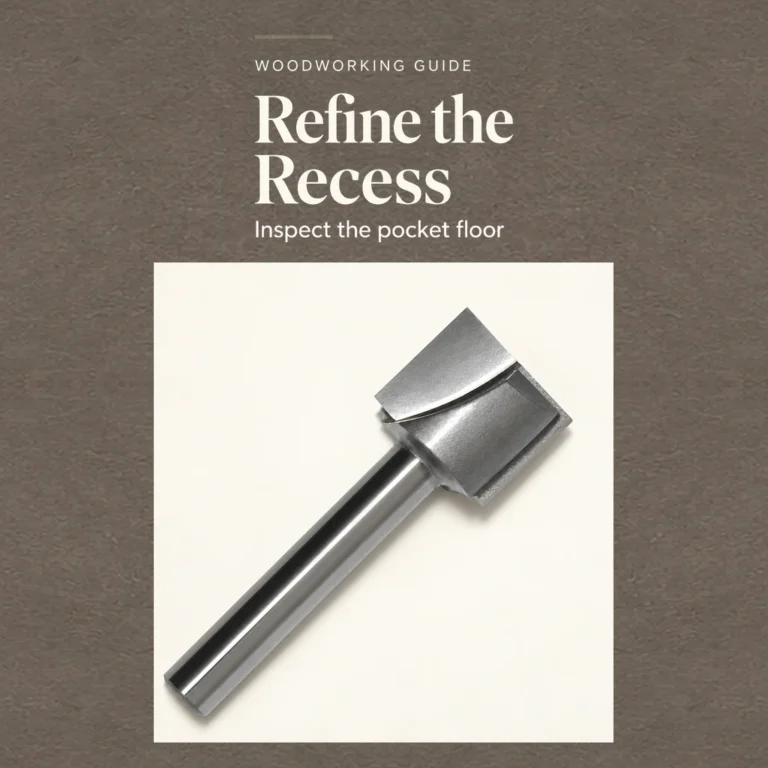
The JEEFOO FA convex semi-round router-bit family is listed for decorative profiles and arc details in wood and suitable wood-based materials. It illustrates the geometry side of the discussion. Its general application description does not establish approval for every modified timber, coating system or proprietary cladding profile.
Keep those decisions separate. The required curve belongs to the component drawing and confirmed tool geometry. Machining suitability belongs to the actual stock, cutter and machine combination. Finishing belongs to the specified coating system and its instructions. A useful tooling discussion connects these requirements without allowing one broad product label to stand in for all three.
A more precise description of the finished part
For modified wood, describe the timber, the newly machined faces and the intended finish as distinct parts of the specification. A routed edge may retain the underlying modification while requiring surface preparation or finishing under the applicable system. Understanding that distinction prevents a surface colour change from becoming an unsupported claim about the whole board.