Detachable furniture joints need more than a connector that can be released: the finished furniture must leave room to reach it and a clear route for the separated part to move. That distinction connects woodworking with the growing interest in adaptable interiors. A recess may be straightforward to machine while the eventual release mechanism becomes inaccessible behind another shelf or panel.
This article considers that design problem, rather than offering a universal connector installation method. It separates the geometry made in the workshop from the space needed when somebody later repairs, rearranges or dismantles the furniture.
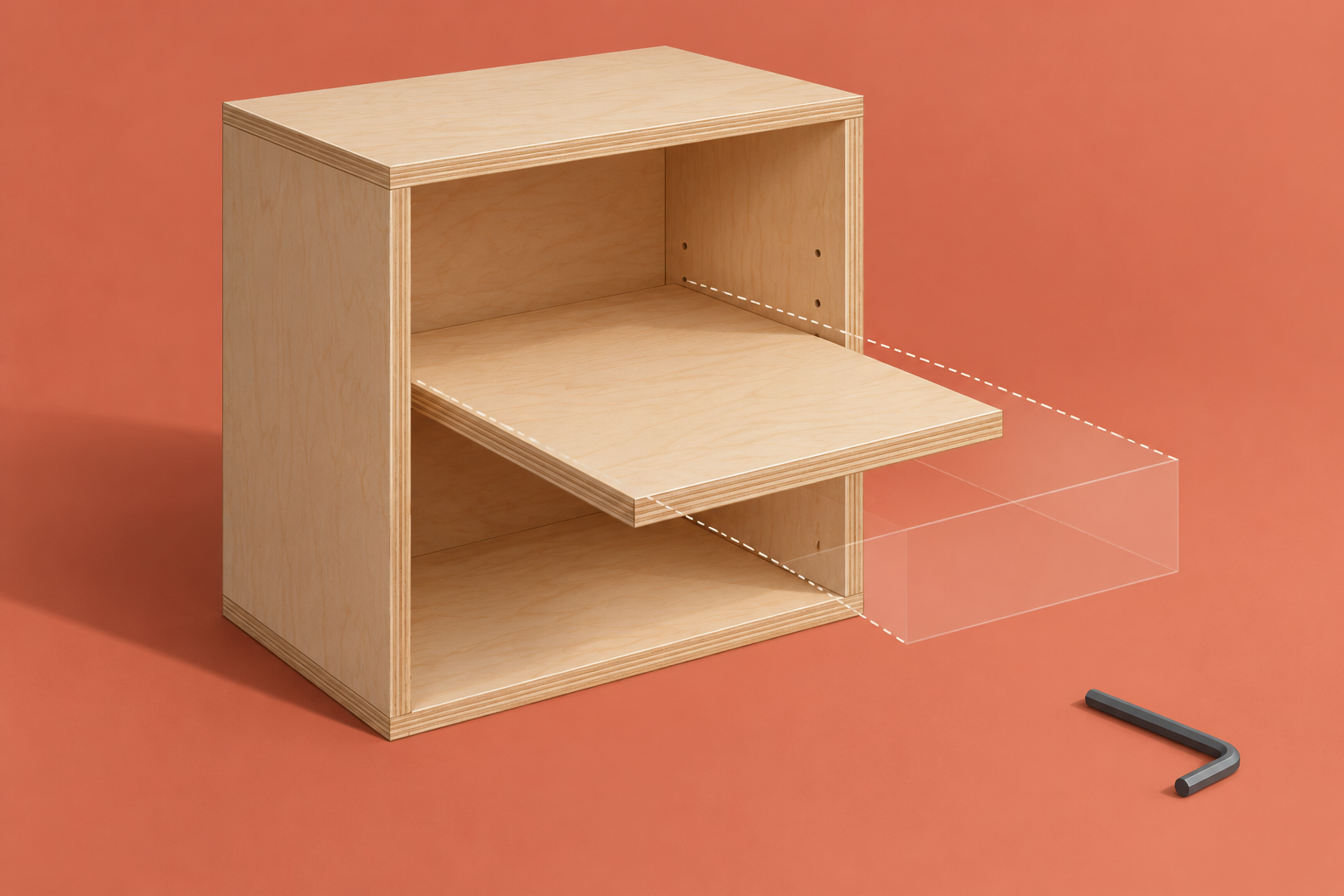
Adaptable interiors bring a different question to the workshop
In its October 2026 interior-design report, interzum describes an emphasis on flexible spatial systems rather than isolated decorative styles. It also announces an interzum showcase during ORGATEC in Cologne, 27–30 October 2026. This is industry context, not a claim that JEEFOO participates or that a particular fitting has been demonstrated there.
For a cabinet maker, the useful question is modest: can a component be changed without treating the entire cabinet as disposable? A removable shelf, replaceable side or serviceable internal partition presents a different design brief from an assembly intended to remain permanently bonded. The decision belongs early in the design, before the machining features become fixed.
A machined seat is not the same as release access
A connector seat locates and retains hardware. An access opening lets an assembly tool reach a mechanism. The surrounding free space lets that tool approach, engage and move. These are related but separate requirements. A correctly positioned opening can still be unusable if an adjacent component blocks the required approach.
Imagine a shelf fitted inside a narrow unit. Its connection can be reached before the back panel is installed, but that does not establish access after installation. The hypothetical example is not a fault attributed to any named system. It simply shows why the assembled arrangement, rather than the isolated panel drawing, is the relevant view for future servicing.
Detachable furniture joints depend on the specified system
Lamello’s P-System documentation provides a concrete distinction. Clamex P is described as detachable, with a small access opening used to operate its lever. Tenso P, by contrast, is described as a self-clamping aid for glued joints. A shared system family does not mean that every connection has the same later disassembly function.
Those descriptions belong to Lamello. Its dedicated groove, connector geometry and installation requirements must come from the applicable manufacturer documentation. They do not establish compatibility with a general-purpose JEEFOO router cutter. Nor does a detachable mechanism, on its own, certify a finished furniture design’s strength or repeated-use durability.
Think through the removal sequence, not only the final shape
Releasing hardware is only one moment in dismantling. The component then needs a direction in which it can move without being trapped by neighboring parts. A shelf that must slide forward needs an unobstructed exit; a panel lifted away needs the appropriate space above it. The exact motion depends on the construction and must not be guessed from a photograph.
This is an assembly-design inference: represent the furniture in successive states, including the state after one part has been removed. A drawing can then explain which component comes first and where access becomes available. Such a sequence is more informative than labeling every joint “removable” while showing only the completed cabinet.
Where ordinary woodworking cutters fit
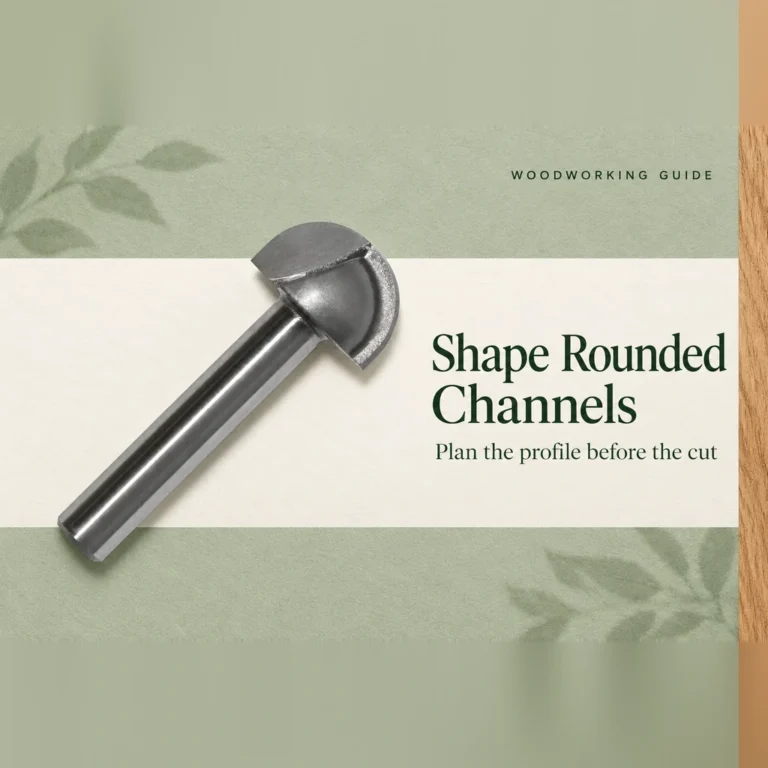
The JEEFOO DE drill-style straight cutter is listed for routing recesses and controlled material removal in wood and suitable wood-based panels. That is a conventional machining context for furniture components, not a claim that it produces proprietary connector profiles. Its exact dimensions, entry capability and machine suitability need confirmation for the actual operation; the listing gives no basis for a universal installation recipe.
Designing a useful way back out
In interzum’s 2025 interview with byform produktdesign, the designers connect circular thinking with demountable construction and separating constituent materials. That is a design direction, not proof of a particular environmental saving.
For detachable furniture joints, a practical response is to preserve both access and a removal route. Keep the machining drawing, specified hardware and intended disassembly sequence consistent. The result is a clearer design proposition: not merely furniture that can be put together, but furniture whose intended way apart has also been considered.