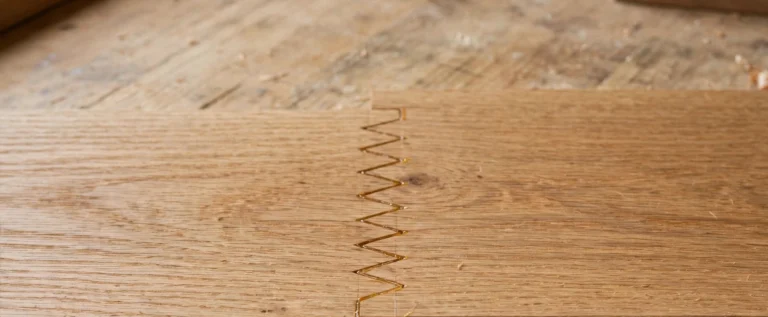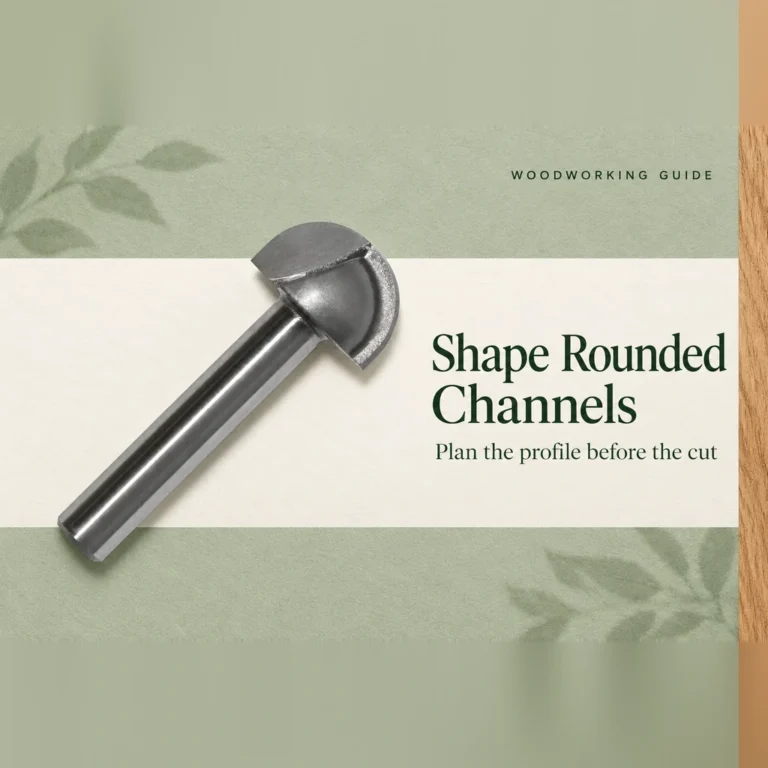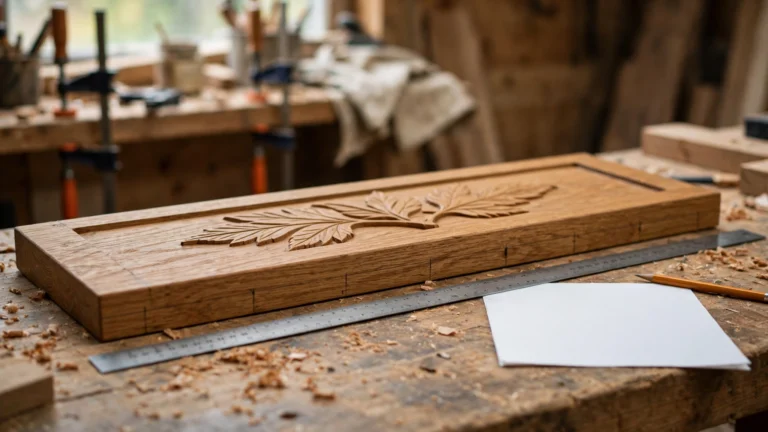
Sunken glue line: JEEFOO lists the GW 12.7×45 for leveling recess floors in compatible solid wood. Its flat-bottom profile serves a finishing pass after bulk material removal. On a suitable edge-glued panel, mark where this pass crosses the seam.[1]
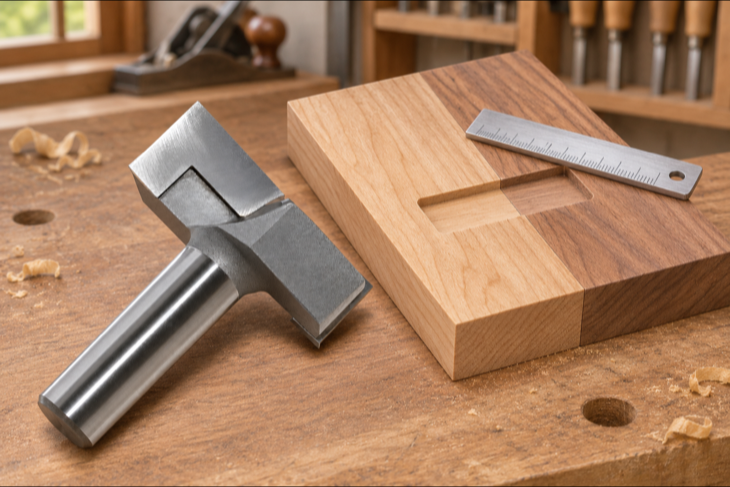
The GW setup guide calls for a representative trial and consistent workholding, toolpaths and inspection methods. Keep the reference surface and initial depth readings with the trial pocket so that a later inspection can use the same basis for comparison.[1]
Why a seam can sink — sunken glue line
In its guidance on planing and sanding, Titebond explains that as its water-based glues lose moisture, the wood beside the joint swells. A pass made then trims the swollen region level. As that wood dries, the finished surface drops locally.[2]
Read the footprint of a sunken glue line
The USDA Forest Service describes this shallow channel along the glue line. It identifies a different footprint when one board starts wetter than its neighbors. After the panel has been surfaced, that component shrinks in thickness across its width.[3]
To investigate a GW pocket, map the low area across the joint and record the interval from gluing to surfacing. The guide relates conditioning time to thickness, temperature and end use.[3]
Sources
- [1] GW Cleaning Bottom Router Bit 12.7×45 — JEEFOO
- [2] Titebond — Glues: Application Tips
- [3] USDA Forest Service — PDF (treesearch/20122)
Related reading: MDF Spoilboard Surfacing: Flat Face & Airflow and GY or GW Router Bit: Groove Floor