An enquiry for a woodworking cutter says “power feeder fitted,” so the buyer describes the application as mechanical feed. That description may omit the feature that matters. A powered device does not, by itself, establish the woodworking cutter feed category used in woodworking tool documentation. The way the workpiece or tool is held and guided during machining is part of the definition. [2]
The WA A Grade 6 × 22 listing on this site requests machine and application information before a made-to-order cutter is quoted. Its reference name is not presented as a complete specification. [1] The page does not state a MAN or MEC marking. The discussion here therefore helps describe a proposed purchase; it does not approve this WA configuration for either feed category.
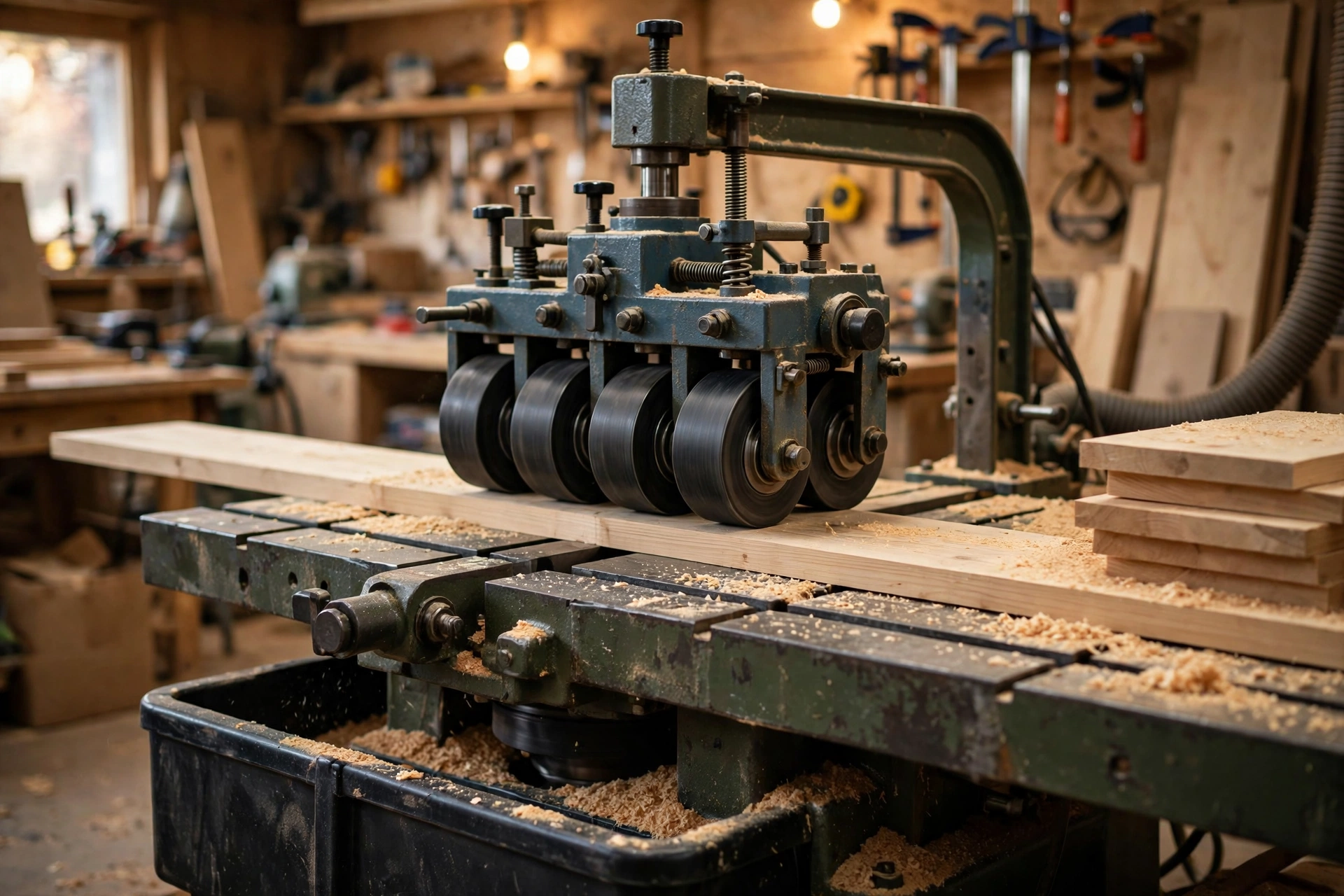
The counterexample: a removable powered device
LEUCO’s technical explanation defines manual feed, MAN, through manual holding and guiding of the workpiece or machine element carrying the tool. It also includes a removable feed device that is not interlocked with the tool, and a manually operated push-slide. Mechanical feed, MEC, instead involves an integrated machine mechanism that mechanically clamps and guides the workpiece or tool-carrying element during operation. [2]
Consider a hypothetical enquiry involving the removable, non-interlocked device described in that definition. Its motor can move material, but that fact does not remove it from the MAN description. Calling the equipment “automatic” without describing the arrangement would conceal the distinction. This is a classification example, not an assessment of a particular workshop or a suggestion to alter its feeder.
Read the proposed tool’s permission separately
Leitz’s May 2025 ProfilCut Q manual lists feed type separately in both tool marking and ordering information. Its intended-use section restricts MEC-marked tools to mechanical-feed machines and states that MAN-marked tools may also be used with mechanical feed. It separately requires attention to the machine manufacturer’s tool-suitability instructions. [3]
Those statements concern the documented Leitz system. They explain why a feed designation is useful purchasing information, but they do not assign a Leitz marking, construction or approval to the WA cutter. Nor does matching a feed category settle the remaining tool and machine limits. The buyer needs the proposed tool’s own applicable instructions, rather than a permission borrowed from another manufacturer’s manual.
Replace the shorthand with an identifiable arrangement for the woodworking cutter feed category
For a WA enquiry, the useful correction is to replace “power-fed” with a description of the actual machine and feeder arrangement. Identify the machine, identify any separate feed unit, and describe how the workpiece or tool-carrying element is retained and guided during machining. Where the arrangement’s status is unclear, obtain that information from the equipment documentation or responsible technical person before selecting a category.
Then ask whether the quoted cutter is intended for that documented arrangement, with the answer tied to the offered tool configuration. This is a focused application question, not a request for a general assurance that the cutter is “for woodworking.” A change from one machine arrangement to another should be visible in that question even if the requested profile stays the same.
For this product, the published WA page supplies the starting point for an application review. [1] It supplies no basis for filling an undisclosed MAN/MEC field by inference. Resolving that missing information before purchase is more useful than allowing the presence of a feeder motor to decide the tool’s permitted use under the woodworking cutter feed category.
Sources: [1] JEEFOO Woodworking Tools, WA A Grade 6 × 22, supplier product description. [2] LEUCO, User know-how, Types of feed. [3] Leitz, ProfilCut Q instruction manual, 05/2025, printed pages 13–14, marking, ordering details and intended use. Checked 5 November 2026; manufacturer explanations are cited, not a reading of the complete EN 847-1 standard.