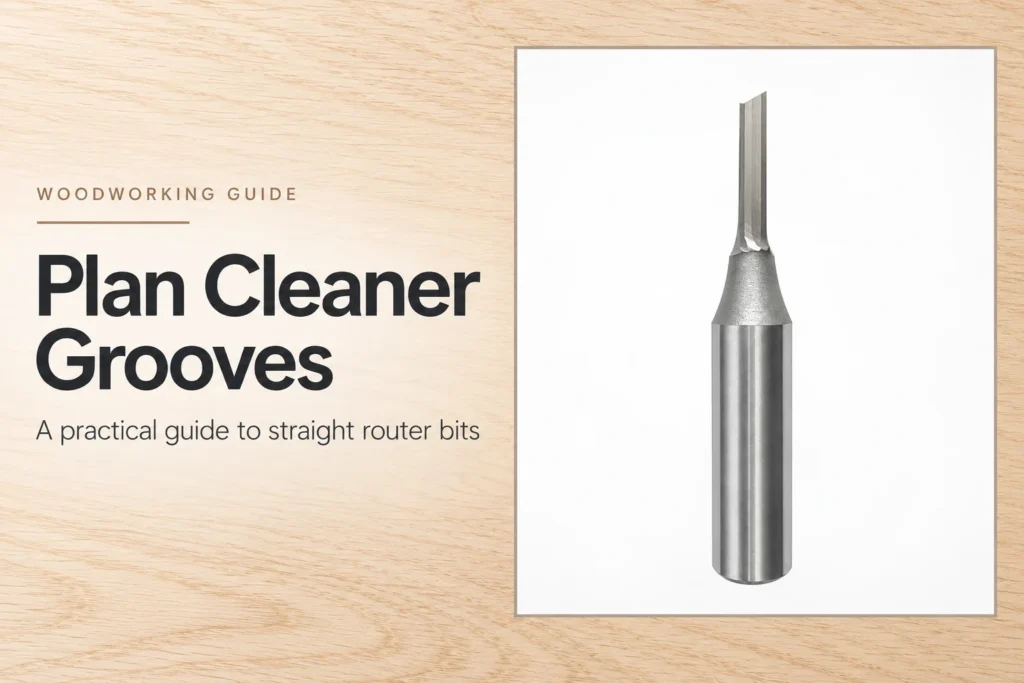
TCT straight router bits should be selected from the groove specification and the machine interface together. JEEFOO lists the WA TCT Straight Cutter range for woodworking applications, including an A Grade 6 x 22 configuration. For purchasing and setup, translate the required groove into separate cutting-diameter, cutting-length and shank requirements before choosing a model.
Table of Contents
1. Define the Groove for TCT Straight Router Bits
Write down the required width, depth and position from a clear workpiece datum. Include the acceptable width variation and the purpose of the groove: a decorative channel, a locating feature or a recess for another component. A nominal width alone leaves important questions open. The inspection method and fit requirement should be agreed before a tool is ordered.
2. Choose the Groove Width Strategy
For TCT straight router bits machining a straight slot along one centerline, the cutter’s effective cutting diameter strongly influences the resulting width. A wider groove may be produced through an approved offset toolpath, provided the cutter and machine are suitable. Plan that strategy explicitly so purchasing does not assume the groove width must always equal the tool diameter.
3. Keep Cutting Diameter and Shank Separate
The cutting diameter describes the rotating cutting envelope. The shank is the portion held by the collet or tool holder. Two tools can share a shank size while producing different groove widths. Enter both dimensions in the tooling record, using the supplier’s drawing labels and units. Confirm that the selected shank matches the actual holder.
Treat a compact catalog name as a reference for finding the product. Confirm what each number represents before turning it into a purchase specification. For the WA listing, request the applicable drawing rather than assigning the title’s numbers to diameter, shank or cutting length from their order alone.
4. Approve the Setup and First-Piece Groove
When setting up TCT straight router bits, check the required cutting length, holder clearance and workholding together. The tool must reach the specified depth with the manufacturer’s required shank engagement and without interference. Excessive projection introduces an avoidable setup variable. Confirm the permitted operation and entry method, especially when the path begins inside a closed pocket.
Machine a first-piece groove in representative stock using approved operating parameters. Measure width at several positions and check depth from the agreed datum. Record the selected cutter, tool offset, material batch and accepted result. If width varies along the slot, inspect the setup and workholding before simply replacing the nominal diameter.
Choosing TCT straight router bits links the drawing to the cutter and the cutter to the holder. Use the JEEFOO WA reference to identify the product, then release the job only after the actual dimensions and first-piece groove have been confirmed.
TCT Straight Router Bits: Frequently Asked Questions
Does the shank size tell me the finished groove width?
No. The shank fits the collet or holder, while the cutting diameter defines the cutting envelope. A shared shank size does not make two cutters interchangeable for the same groove. Confirm both dimensions on the current drawing and measure the first-piece groove against the job specification.
Can every straight cutter plunge into a closed pocket?
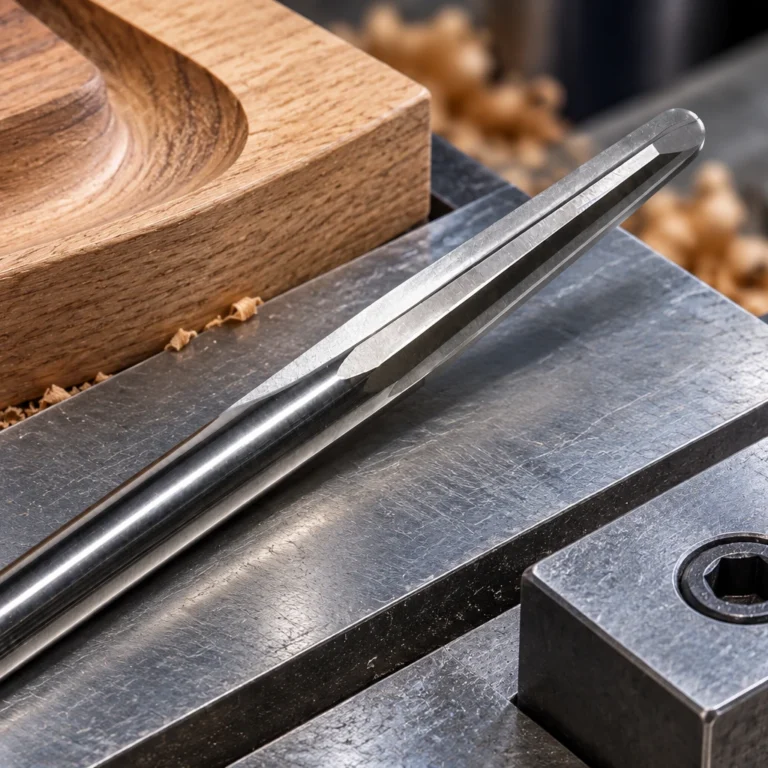
No such capability should be assumed from the name. Confirm the cutting-end geometry and permitted entry method with the supplier. Check the planned approach, holder clearance and usable cutting length against the machine and tool instructions before releasing a closed-pocket operation.
What should be recorded before repeat production?
For TCT straight router bits, retain the exact tool reference, drawing revision, cutting diameter, usable cutting length, shank and holder specification. Record the material batch, workpiece datum, programmed offsets, width and depth measurements, and accepted sample. Recheck after a tool, material or setup change so the next operator has a defined target rather than a nominal product name.
What should I inspect if groove width varies?
Compare readings along the groove using the agreed inspection method. Review workholding, tool condition, holder fit and the programmed path before attributing the change to nominal diameter alone. A good fit at one location does not prove that the complete groove meets the drawing.
See the OSHA router guidance for general guarding and tool-fastening considerations. Follow the instructions for the actual machine and cutter. If the design calls for a curved groove, compare the round-bottom groove planning guide before selecting a profile.