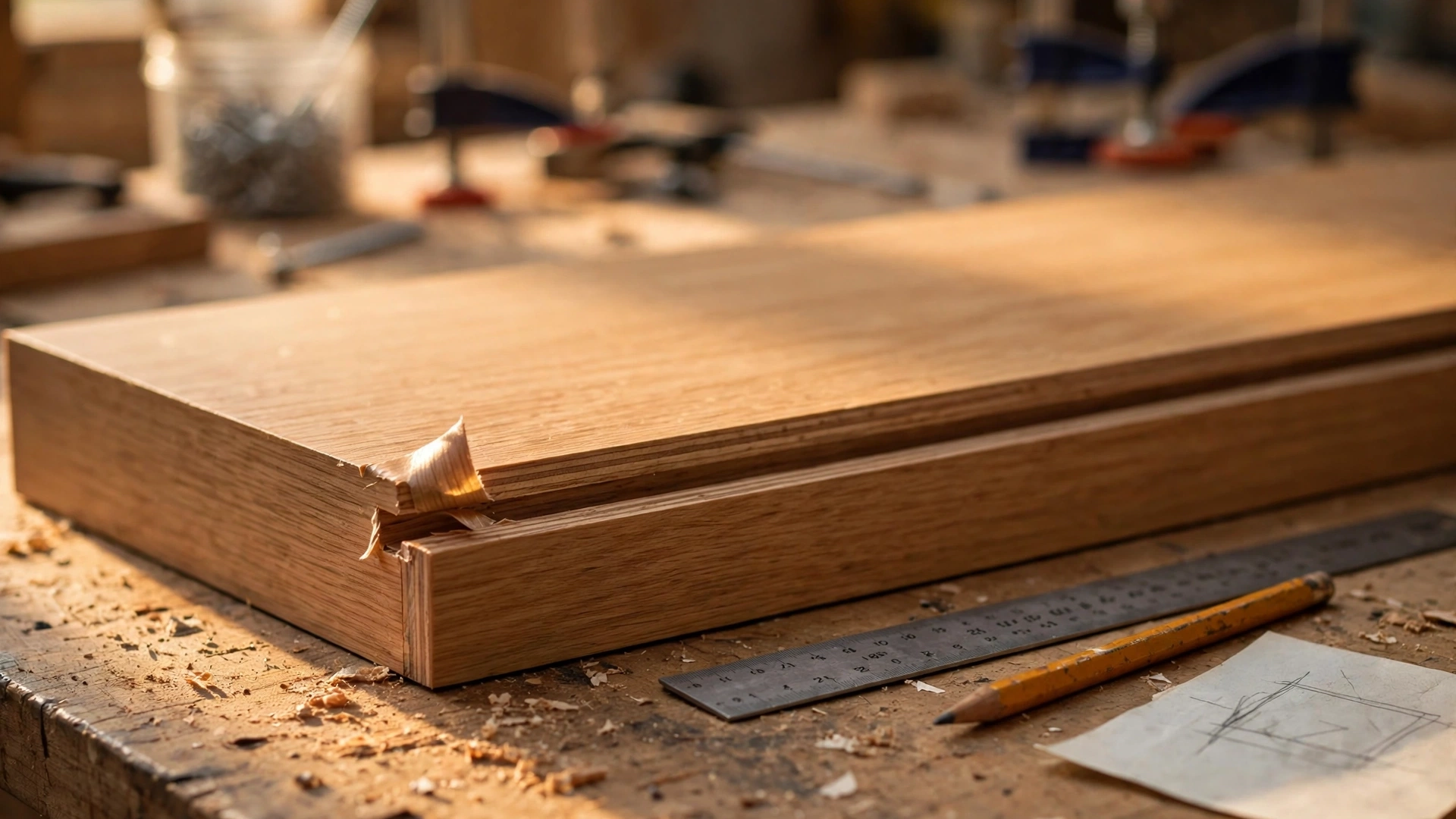
WA-routed slot: A furniture shop is making a veneered shelf with a straight slot that opens at the front edge. The drawing calls for the slot to continue through an applied edgeband. On a trial shelf, a small piece of veneer lifts beside the opening after the edge is trimmed. The shop needs to identify whether it was already loose when the slot was routed or whether the banding and trimming operations changed the edge.
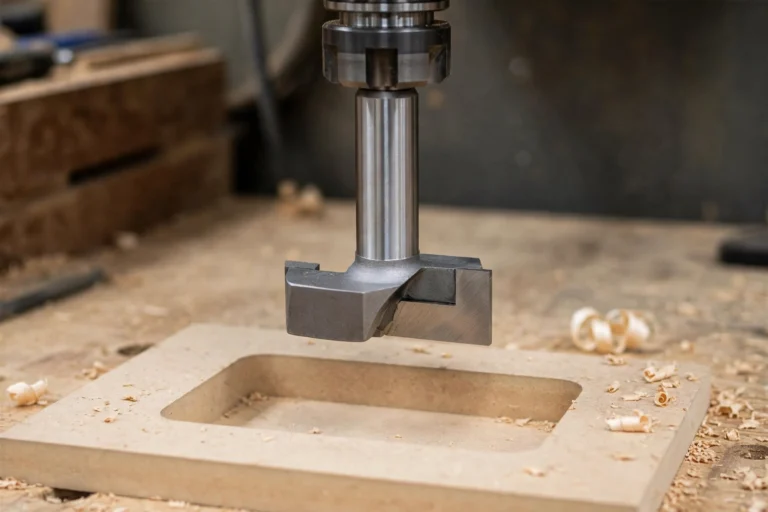
JEEFOO’s WA straight-cutter category lists the A Grade 6 x 22 for slotting. In this example the slot is part of a veneered assembly whose routing, banding and trimming sequence must be approved for the actual materials. Use spares from the same panel preparation and keep each sample identified as it moves through the trial.
Record the two corners of a WA-routed slot opening separately
Mark the left and right corners of the slot on the drawing as viewed from the front. After routing, inspect where the slot walls meet the face veneer. Use light across the face to reveal any raised edge. Keep a record of a sound corner as well as the affected one. A dark line along the glue layer can look like a gap from above. Check the side view before describing the veneer as lifted.
Inspect the same corners after banding and again after trimming. If the band covers a corner before trimming, mark it as obscured at that stage. Do not assume it stayed intact while it could not be seen. A spare stopped before trimming can be sectioned at the opening under the shop’s approved procedure. Preserve the orientation so that a section on the good side is not mistaken for evidence about the affected side.
Check what the band does at the opening
Compare the section through the suspect corner with one through an intact corner. Look for an already detached veneer edge, a bond gap beneath the band, or a small bridge of band material over the slot opening. If the bridge remains after trimming, it can be caught during later handling. Check the opening with the mating part or gauge specified for the shelf. A gauge that fits the slot farther back can still catch at the band.
When the first raised edge is visible immediately after routing, start with the routing-stage sample and its material support. If it first appears after a later operation, compare the retained pieces before changing the slot program. Release the sequence with the required checks at both corners and a sample that shows what a finished opening should look like. That lets the next operator distinguish an edge that looks untidy from one that actually prevents the part from fitting.
Sources [1] JEEFOO WA straight-cutter category.
Related reading: A sunken glue line across a GW-routed pocket floor · When a Glue Line Crosses a GC-Carved Hollow