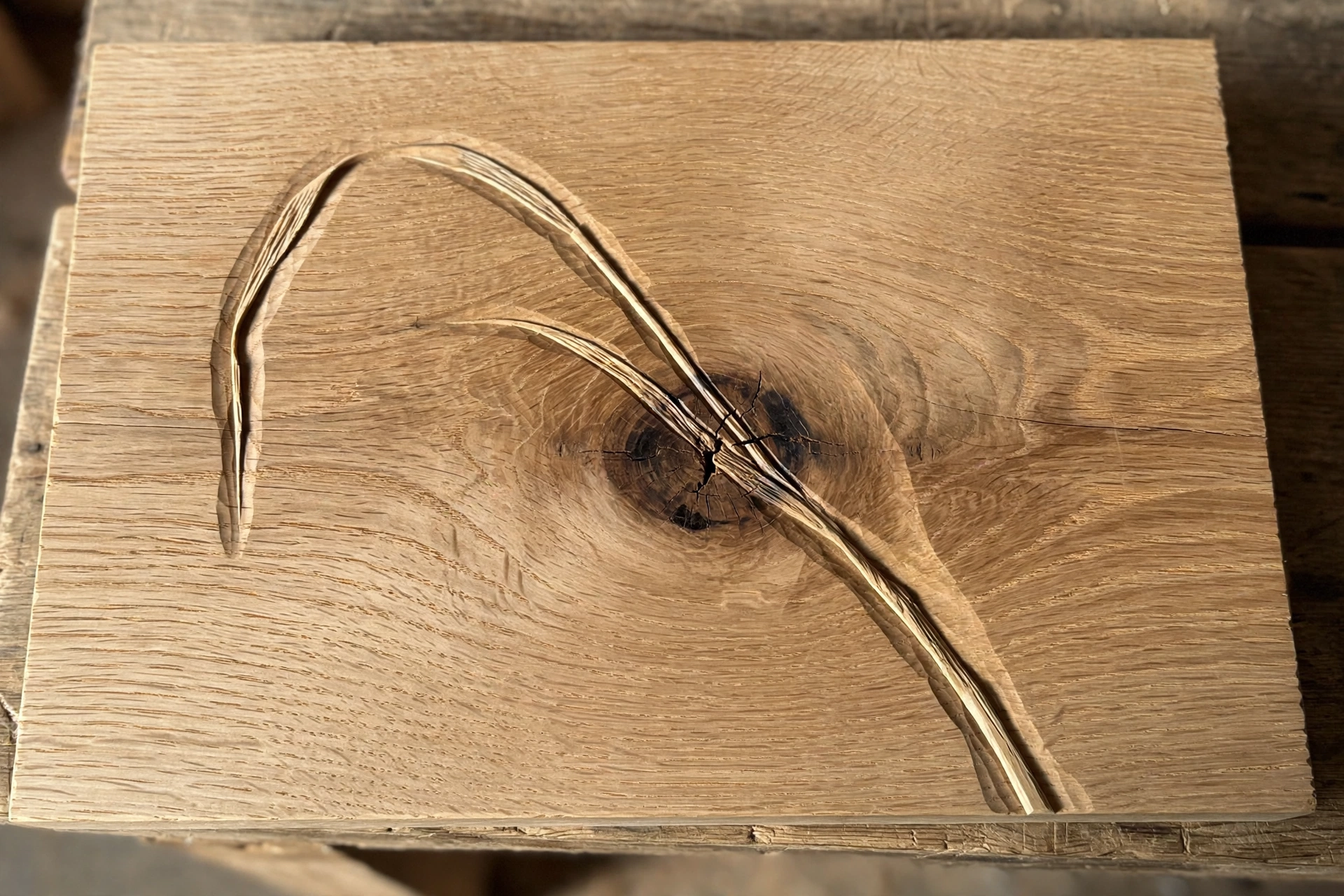
In this GC-carved relief, a cabinetmaker wants a small knot to remain visible in a carved oak door. The design shows a reed bending across the place where the knot meets clear wood. On the first sample the reed reads as two short strokes, although the cutter has followed a continuous path. The useful choice is where the design crosses that grain feature. Moving the design a little on the board may preserve both the knot and the line.
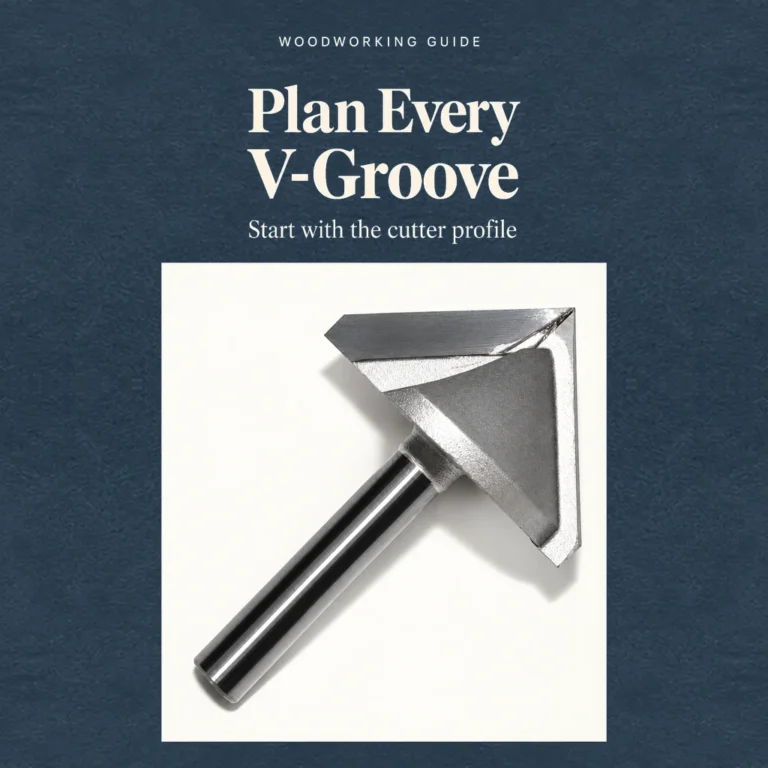
JEEFOO identifies its GC as a tapered ball-nose cutter for wood relief. The following layout trial concerns the relationship between the carved shape and a particular board. It establishes no permission to cut loose knots, split stock or boards outside the workshop’s material acceptance rules. Use only stock already cleared for machining under the applicable equipment instructions.
Decide which line must survive in a GC-carved relief
Lay the door drawing over a record of the actual blank. Include the finished perimeter, hinge side and the face that will be seen in service. Mark the visible boundary of the sound knot. Identify the point where the reed is thinnest in the drawing and the length of the bend that someone must see to follow its shape. A knot can be a deliberate dark feature in a broad recess while the same feature, a short distance away, makes the edge of a narrow reed hard to follow. Treat those as separate placement choices even though the outline of the finished door stays fixed.
A single position on the rough face is provisional. The pattern visible at the final carved depth can differ from the pattern at the starting surface. If the knot is central to the design, make the comparison on representative approved stock before accepting the placement on the production door.
Compare two positions at finished depth
On trial pieces, retain the same carved design, GC cutter and approved program strategy for this GC-carved relief. Place the feature boundary across the narrow reed in one trial. In the second, aim for the boundary to cross a broader part of the design while leaving the reed on clearer wood. Record the intended and actual positions separately. A comparison is weak if neither piece produces the intended crossing after cutting.
Examine the reed before finishing, first under the normal viewing light and then with light across the bend. Follow the actual ridge from the base toward the tip. A continuous ridge that seems broken under one viewing condition suggests a legibility problem. A gap or torn section visible in the cut itself calls for a separate assessment of the board and machining result. Write down which condition occurred and the exact place on the reed. A single note such as “poor at knot” leaves the next operator guessing what needs to change.
Keep the decision with the blank
If the second position preserves the line and retains the visible knot in the intended region, record the acceptable region on the blank layout for this GC-carved relief and attach that decision to the job. The reference should identify the door face and give a fixed edge from which the layout was registered. Check each new blank against that drawing. Two boards from the same shipment can place the grain feature differently relative to the reed even when both boards meet the material specification.
When the finished door leaves little freedom to move the motif in a GC-carved relief, show the trial pieces to the designer before routing the production blank. They can decide whether a knot belongs in that area of the pattern or whether the door needs a different blank. Keeping both examples makes the decision concrete: the rejected piece shows where the bend disappears, and the accepted piece shows the range of grain contrast the design can carry.
Related reading: Tapered Ball Nose Router Bits: 6 Essential Checks to Succeed and CNC Router Bit Testing: 4 Essential First-Piece Checks — two trial-based guides for GC-carved relief work.